

- This project has passed.
Rethinking Capitalism and Economic Order II
YSI Webinar Series @ Capitalism
Start time:
November 28, 2025 @ 8:00 am - 5:00 pm
EST
Location:
Online
Type:
Lecture
Speakers
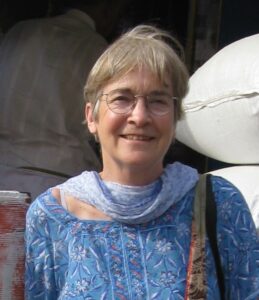
Prof. Barbara Harriss-White
Emeritus Professor of Development Studies and Emeritus Fellow, Wolfson College, Oxford University
Description
The History of Economic Thought Working Group and East Asia Working Group of the Young Scholars Initiative is launching a webinar series that brings critical attention to the idea, practice, and evolution of capitalism. This project aims to reconnect the history of economic ideas with the world they sought to describe, reform, or transform. Capitalism is not just an economic system; it is a lived experience, a political project, and an ideological battleground.
We seek to open a conversation about capitalism as it has been theorised, imagined, and contested across historical periods and geographies. From early critiques of enclosures and slavery, to colonial accumulation and contemporary platform economies, capitalism’s forms have shifted, but its underlying logics—commodification, accumulation, exclusion—continue to shape our worlds.
This series will invite senior scholars who work across traditions—Marxist, classical, feminist, ecological, decolonial—to speak to these shifting realities. Our goal is not to arrive at a unified definition of capitalism, but to stay with its plurality. What is the nature of capitalism in our time? What kind of capitalism is being debated in different contexts? What kind of resistance does it provoke? How do economic theories shape their justification or critique?
Our approach to history foregrounds tension, silence, and the politics of knowledge. The HET WG places special emphasis on themes like decolonisation, pluralism, epistemic difference, and the often under-acknowledged intellectual contributions from the Global South. We invite our participants to think about histories of caste, race,
Hosted by Working Group(s):
Organizers
Attendees
Navyatheertha S G
Celia Sánchez-Nieves Plana
Shreya Rajsekhar
Maria Espín
CHING MAN CHUNG
Evgeniia Vaniukova
Mithun Rath
Samson Afolabi
Ellen Nordmark
Clara
Nadine Reeve Wessels
kashish
Suzanne Broer
Suheli Chakraborty
Emma Greeff
Hizkia Polimpung
Sinthuja Sritharan
muhammad Abdulaziz muhammad
Chiara Rauseo
Gabriela Ferreira
José G. Vargas-Hernández
Akansha
Anh Nguyen
Meghana Prasad Nuthanapati
Tanmay Nandi
Nevra TUTUNCU
Okikioluwa Omole
Franck Daniel ATEBA
Agung Dwi Putra
Mahmudul Karim
Bola-Ige Alabi-Efeshodiamhe
Morakane Madiba
Silas Xuereb
Mahika Sharma
Mitra Yousefimashhour
Manuel Alejandro Alarcón Morales
Daniel Vukovich
Sanchita Agarwal
Ulysse DAVID
Ye Ma
Francisco Mango
Jijitha kj
Matheus Souza Santos
Arko Banerjee
Aissata Diallo
DANIEL STUMM
Alicja Paulina Krubnik
ECEM OKAN
sheunopa moyo
William Ham
Gayathri Sriskanthan
Eric Kayihura
Federico Gonzalez
Stacey-Lee Marais
Muthanna Saari
Mohammed Anfas
Yevai Gerber
Jaina M Haran
Mauricio Maynard do Lago
Khaiyam Khalid
Olivia Gum
Feyisade Adeyemi
Marios Fokas Tsamichas
Marius Torres
Kameko Marquez
Timothy Deng
Habeeb Adewoyin
Tayfun Mertan
apilang apum
Sajid Inamdar
Anali Baruah
João Bosco Lissandro Reis Botelho
Toni Benedikt Stricker
Simran Bheda
