Climate Change:
Global climate change is the long-term alteration in the average temperature, largely driven by anthropogenic activities – caused by excessive burning of fossil fuels, high rate of deforestation, and growing industrial emissions – that compound the high concentration of greenhouse gases in the atmosphere. The IPCC AR-6 (2023) observes that the world’s average temperature will increase from the current average of 1 degree Celsius to 1.5 degrees Celsius by 2045 and further to 2 degrees Celsius by the end of the 21st century. Therefore, the WMO cautions that climate change is not just about rising in average temperatures, but its broad range of catastrophic socio-economic and environmental effects due to: (i) frequent and intense extreme weather events (floods, droughts, heatwaves, wildfire fire, and storms), (ii) melting glaciers and rising sea levels, and (iii) disruption of ecosystems and biodiversity. Climate change is not just an environmental issue; more importantly, it imposes high economic and societal costs on businesses and society at large. Numerous researchers have already highlighted the economic effects of climate change. The worrisome aspect is that developing countries are highly affected if current climate change trends continue. Climate change is a transboundary externality, and actions to mitigate and adapt must be seen from a global perspective. There is an urgent need for a global response to climate change to reduce the societal costs and increase economic resilience. Climate change impacts exacerbate income inequalities among vulnerable populations and further intensify the existing social
Climate Change:
Global climate change is the long-term alteration in the average temperature, largely driven by anthropogenic activities – caused by excessive burning of fossil fuels, high rate of deforestation, and growing industrial emissions – that compound the high concentration of greenhouse gases in the atmosphere. The IPCC AR-6 (2023) observes that the world’s average temperature will increase from the current average of 1 degree Celsius to 1.5 degrees Celsius by 2045 and further to 2 degrees Celsius by the end of the 21st century. Therefore, the WMO cautions that climate change is not just about rising in average temperatures, but its broad range of catastrophic socio-economic and environmental effects due to: (i) frequent and intense extreme weather events (floods, droughts, heatwaves, wildfire fire, and storms), (ii) melting glaciers and rising sea levels, and (iii) disruption of ecosystems and biodiversity. Climate change is not just an environmental issue; more importantly, it imposes high economic and societal costs on businesses and society at large. Numerous researchers have already highlighted the economic effects of climate change. The worrisome aspect is that developing countries are highly affected if current climate change trends continue. Climate change is a transboundary externality, and actions to mitigate and adapt must be seen from a global perspective. There is an urgent need for a global response to climate change to reduce the societal costs and increase economic resilience. Climate change impacts exacerbate income inequalities among vulnerable populations and further intensify the existing social inequalities, creating new challenges for communities in developing economies. Therefore, the conference calls for deliberations on the intricacies of current economic models and on business and societal needs in the context of climate change. These challenges need multipronged approaches, not only the availability of finance and technology to mitigate climate change, but importantly, a just transition that has profound social and economic impacts on the well-being, security, and equity of people worldwide through access to food, shelter, water, energy, health, education, environment, and their production and distribution system to offer policy solutions.
Objectives:
The major objective of the international conference on climate change goes beyond academic discourse and dialogue, inspiring policy action, building consensus among stakeholders, and strengthening global resolve to combat climate change and secure the future of the economy, business, and society. These objectives ensure the conference is not just an academic event but a catalyst for meaningful progress towards a sustainable, climate-resilient world.
Major tracks of the conference:
1. Present and future trends of climate change:
2. Drivers and magnitude of climate change:
3. Impact of climate change on the economy, business, and society:
4. Climate resilience, mitigation, and adaptation:
5. Climate change, just transition, and Climate finance:
6. Climate change and sustainable development goals and
7. State actions on climate change and climate finance:
Guidelines for Submission:
The authors of the research article are requested to follow APA style for preparation and ensure a font size of 12 and Times New Roman. Both Word and PDF of the research article may be submitted to the following Email ID: icccpu2026@gmail.com
Important Dates:
Last Date for Full Paper Submission: 15th May, 2026,
Notification for Acceptance of paper: 20th May, 2026,
Registration deadline: 30th May, 2026,
Conference Dates: 15th to 17th July, 2026.
Travel, Accommodation, and Food:
Participants are requested to meet their travel and visa costs and to arrange accommodation at their own expense for attending the conference. Following is the list of hotels that the participants may consider: (i). Ocean Spray, (ii). Nalla Eco Beach Resort, (iii). Ganesh Residency: Beach Resort, (iii). Misty Ocean: A Bergamont Hotel and (v). A K Residency. Lunch and refreshments will be provided, and the organising committee will arrange local transportation during the conference days.
Publications:
The selected papers of the conference may be published in a Springer Journal. Two edited volumes will be published by a UK-based publishing company and another by a Bangladesh-based publishing company. Authors should pay separately to receive the published volume.
Local Sightseeing:
Since Pondicherry is one of India’s attractive union territories, a local sightseeing tour will be arranged at no cost.
Chief Advisory Committee:
Prof. Parmod Kumar, Acting Director, ISEC, Bangalore,
Prof. Md. Anwarul Azim Akhand, Vice-Chancellor, (MBSTU), Bangladesh
Prof. Vishwanatha, Vice-Chancellor, Dr. B.R Ambedkar School of Economics, Bangalore
Prof. C. M. Thyagaraja, Vice-Chancellor, Rani Channamma University, Belagavi,
Prof. Naveen Kumar, Registrar, KSOU, Mysore,
Prof. J. Sacratees, Registrar, Manonmaniam Sundaranar University, Tamil Nadu,
Prof. S.A Senthil Kumar, Registrar, NIT, Trichy.
Pondicherry Central University, Puducherry, India:
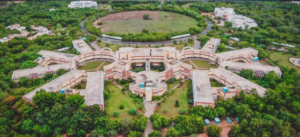
Puducherry Union Territory, one of India’s picturesque tourist attractions, is in Southern India. Pondicherry University (PU) is a Central University established by an Act of the Indian Parliament in 1985. It functions as an affiliated University with a jurisdiction spread across Puducherry, Yanam, Mahe, Lakshadweep, and the Andaman & Nicobar Islands, with the objectives of disseminating and advancing knowledge through teaching and research, and of promoting interdisciplinary research. The main campus is in Kalapet, Puducherry, spanning 800 acres adjoining the scenic Bay of Bengal. Our academic collaborators for the international conference are ISEC, Bengaluru; MBSTU, Bangladesh; and YSI, USA.
Conference Venue:
JN Auditorium, Pondicherry Central University, R Venkat Raman Nagar, Kalapet Puducherry, 605014, India