This workshop seeks to advance research on the development of economic thought in Malawi, with a special focus on how economic thought as a distinct intellectual field has interacted with political-economic policies since the ushering in of independence to the present period. The workshop will be anchored on the following objectives: 1) Explore the evolution of economic thought in Malawi as a distinct intellectual field from Independence to the present period; 2) Assess the dominant methodologies that have been used in the development of economic thought as an intellectual enterprise in Malawi; 3) Explore the dissemination of economic thought in Malawi from Independence to the present period; 4) Critically evaluate the reception of economic thought in Malawian politics; and 5) Establish the relationship between economic thought and political-economic policies from Independence to the present period. The organisers will select 1o young scholars, including Masters students, PhD candidates, and postdoctoral fellows whose research addresses the development of economic thought in Malawi, the dissemination of economic thought as an intellectual enterprise in Malawi from Independence to the present period, the reception of economic thought as an intellectual enterprise in Malawian politics, and the relationship between economic thought and political-economic policies from Independence to the present period. The two-day workshop will start with established scholars presenting their completed or ongoing research on the development of economic thought in Malawi, the dominant methodologies that have been used, and how economic thought as an intellectual enterprise has been disseminated and received, and how it has
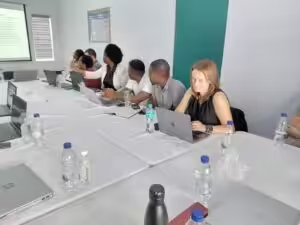
This workshop seeks to advance research on the development of economic thought in Malawi, with a special focus on how economic thought as a distinct intellectual field has interacted with political-economic policies since the ushering in of independence to the present period. The workshop will be anchored on the following objectives: 1) Explore the evolution of economic thought in Malawi as a distinct intellectual field from Independence to the present period; 2) Assess the dominant methodologies that have been used in the development of economic thought as an intellectual enterprise in Malawi; 3) Explore the dissemination of economic thought in Malawi from Independence to the present period; 4) Critically evaluate the reception of economic thought in Malawian politics; and 5) Establish the relationship between economic thought and political-economic policies from Independence to the present period. The organisers will select 1o young scholars, including Masters students, PhD candidates, and postdoctoral fellows whose research addresses the development of economic thought in Malawi, the dissemination of economic thought as an intellectual enterprise in Malawi from Independence to the present period, the reception of economic thought as an intellectual enterprise in Malawian politics, and the relationship between economic thought and political-economic policies from Independence to the present period. The two-day workshop will start with established scholars presenting their completed or ongoing research on the development of economic thought in Malawi, the dominant methodologies that have been used, and how economic thought as an intellectual enterprise has been disseminated and received, and how it has influence political-economic policies in Malawi. Young scholars will have a chance to engage with the senior scholars’ presentations and even interrogate the methodologies that have hitherto characterised the development of economic thought as an intellectual enterprise in Malawi. On the second day, young scholars will present their completed or ongoing research on this topic, highlighting the challenges with previous methodologies and methods of disseminations, the gaps between economic thought and political-economic policies, and how current and future research methodologies and dissemination practices can help bridge the gap between theory and praxis. The young scholars will have the chance of receiving critical feedback from the senior scholars and their peers.
For more information or inquiries, get in touch with Dr Tanaka Chidora @ tchidora@unima.ac.mw or Dr Peter Uledi @ peteruledy@gmail.com